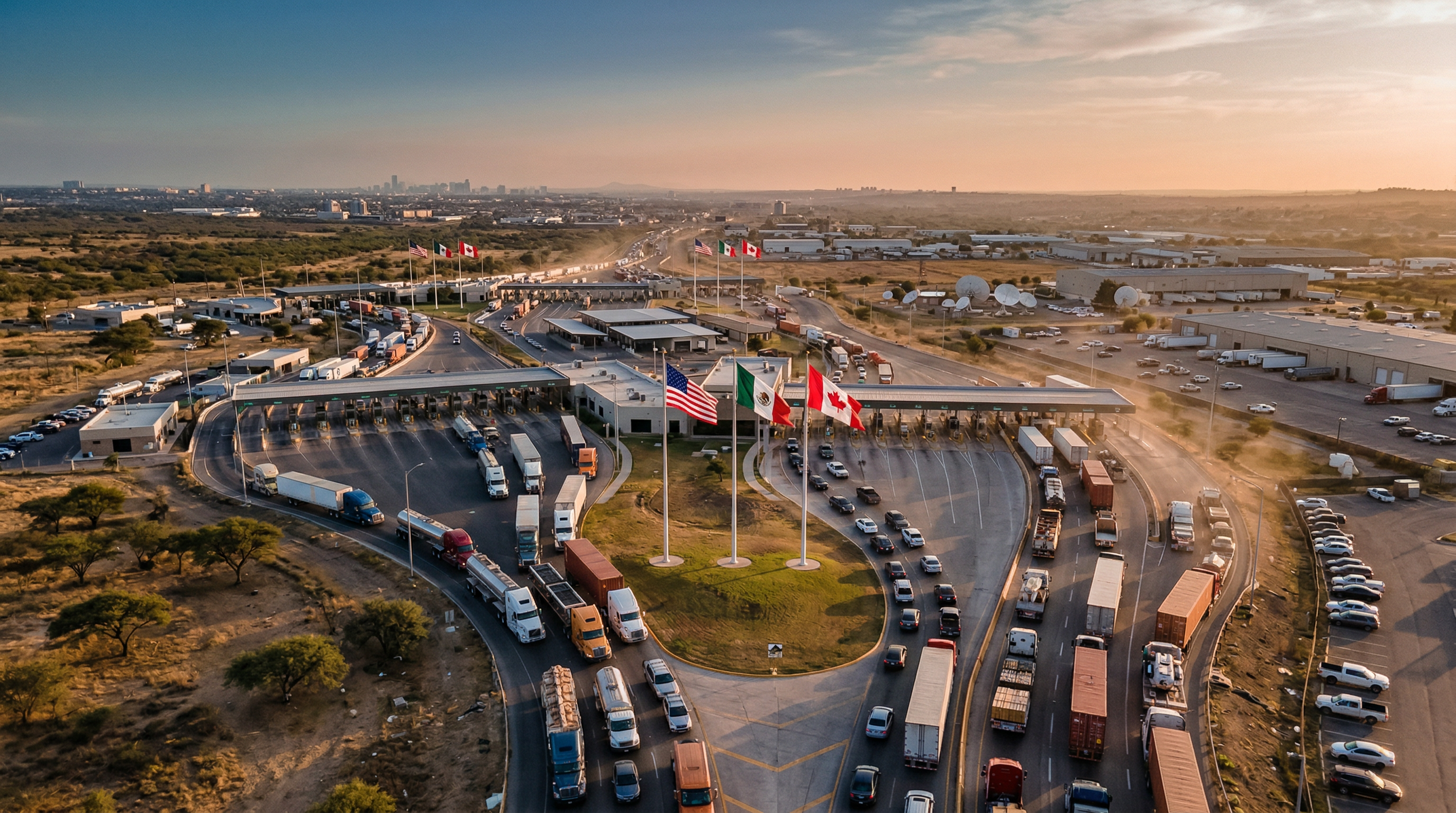
Beyond NAFTA's Shadow: Can USMCA Survive Rising Trade Tensions?
Beyond NAFTA's Shadow: Can USMCA Survive Rising Trade Tensions?
By Melissa K. Cannell
As North America approaches the July 1, 2026, review of the United States-Mexico-Canada Agreement (USMCA), the stakes could not be higher. Lawmakers, businesses, and workers are watching closely to see whether the pact can deliver on its promises: supporting U.S. jobs, boosting growth in industries such as automotive manufacturing, and safeguarding intellectual property and digital trade. The backdrop is tense, with negotiations limited, Canada staying on the sidelines, and lingering Trump-era tariffs continuing to complicate the road ahead. Mexico's door is open, and dialogue is happening. The review could either solidify North America's trade partnership or expose its vulnerabilities.
What USMCA Sets Out to Do
On July 1, 2020, USMCA was crafted to modernize trade, focusing on digital commerce and labor standards, strengthening regional supply chains, and reducing reliance on external markets, particularly China. Every six years, the agreement calls for a review to ensure it remains flexible, balanced, and mutually beneficial.
Despite these goals, U.S.-Canada relations have cooled. Trump-era tariffs, delays on the Gordie Howe International Bridge, and controversial proposals such as making Canada the 51st state or purchasing Greenland have fueled tension.
Tariffs and Judicial Obstacles
Trump has justified tariffs on Mexico and Canada on several grounds. In 2025, the U.S. applied 25% tariffs on many imports from both countries and 10% on Canadian energy. He argues that tariffs correct trade imbalances and pressure neighbors on illegal immigration, drug trafficking, and reshoring manufacturing jobs lost under NAFTA.
The U.S. Supreme Court, however, struck down most of these tariffs as illegal in 2025. Critics argue tariffs have slowed economic growth, raised consumer prices, and cost U.S. businesses over $190 billion in added duties. The Tax Foundation estimated that these measures effectively imposed a $700 tax increase per U.S. household. Tariffs are not just economic tools; they are also powerful instruments of leverage in negotiations.
“USMCA was intended to drive growth, not punish allies.”
Melissa K. Cannell
Mounting Tensions Between Member Nations
Disputes have strained relationships across the USMCA partnership. U.S.-Mexico tensions revolve around energy policy, labor enforcement, and compliance, while U.S.-Canada disagreements focus on digital services taxes and trade in dairy and agricultural products. Legal conflicts and tariffs have complicated the dialogue. Mexico remains open to negotiation, but Canada has stepped back, seeking other trade agreements to reduce dependence on the U.S. Failure to resolve differences could weaken long-term cooperation.
Achievements and Limitations
Even amid tensions, USMCA has delivered measurable results. Trade has grown, customs procedures have become more efficient, labor standards have improved in certain sectors, and exports of vehicles and agricultural goods have risen.
Yet challenges persist. Rules of origin for agricultural products have increased costs in some industries, and reliance on tariffs as a political tool threatens stability. As of 2026, the agreement presents a mix of progress and lingering tensions - the "good, bad, and ugly."
Looking Ahead
The USMCA's future depends on the July review. Possible outcomes include targeted modernization to enhance digital trade and supply chains, renegotiation with stricter U.S. demands, or, though unlikely, fragmentation as countries pursue independent trade deals. Success will rely on the willingness of the U.S., Mexico, and Canada to collaborate and maintain resilient supply chains.
For North America, the 2026 review is more than a procedural checkpoint. It is a test of trust, strategy, and collective vision. Whether USMCA emerges stronger or splinters under pressure, the world will be watching to see if the continent can turn tension into opportunity - or if each country must chart its own path.
- Bitar, S., et al. (2025). USMCA at a crossroads: Trade, tariffs and the future of North American integration.
- Bitar, S., et al. (2026). Renegotiating USMCA: Scenarios and outcomes for North American trade.
- Canada's State of Trade 2024: Supply chains. (2024). Global Affairs Canada.
- Durante, R. (n.d.). The household cost of tariffs. Tax Foundation.
- Howse, R. (2024). USMCA dispute settlement: Strengths, weaknesses and reform options.
- Jennings, M. (2026). Supply chain resilience and North American trade cooperation.
- Negron, M., et al. (2026). The cumulative cost of tariffs on U.S. businesses.
- Refining USMCA to strengthen integration of the North American agricultural sector. (2026).
- Torres, A. (2026). Legal challenges to U.S. tariffs under USMCA.
- United States Requests USMCA Dispute Settlement Consultations on Canada's Digital Services Tax. (2024). USTR.
- U.S.-Mexico-Canada Agreement (USMCA). (2024). Office of the United States Trade Representative.
- U.S.-Mexico-Canada Agreement (USMCA). (2025). Office of the United States Trade Representative.
- U.S. Supreme Court Rules Trump's 'Reciprocal Tariffs' Illegal. (2026).
- White House announces adjustments to tariffs on imports from Canada and Mexico. (2025).
- Wiseman, P. & Verza, M. (2026). Canada seeks trade alternatives amid U.S. tensions. Associated Press.
Melissa K. Cannell is a newspaper reporter, freelance correspondent, and public relations representative.
A graduate of Weber State University in Ogden, Utah, her writing has appeared in the Davis County Clipper, the Davis County Clipper Today, Utah Spirit magazine in Bountiful, Utah, and the Deseret News in Salt Lake City.
Education
Weber State University, Ogden, Utah
Publications
- Davis County Clipper
- Davis County Clipper Today
- Utah Spirit Magazine
- Deseret News