CMCG Commentary / Geopolitics
Raisina Dialogue 2026:
India's Strategic Vision
In a Multipolar World
Introduction
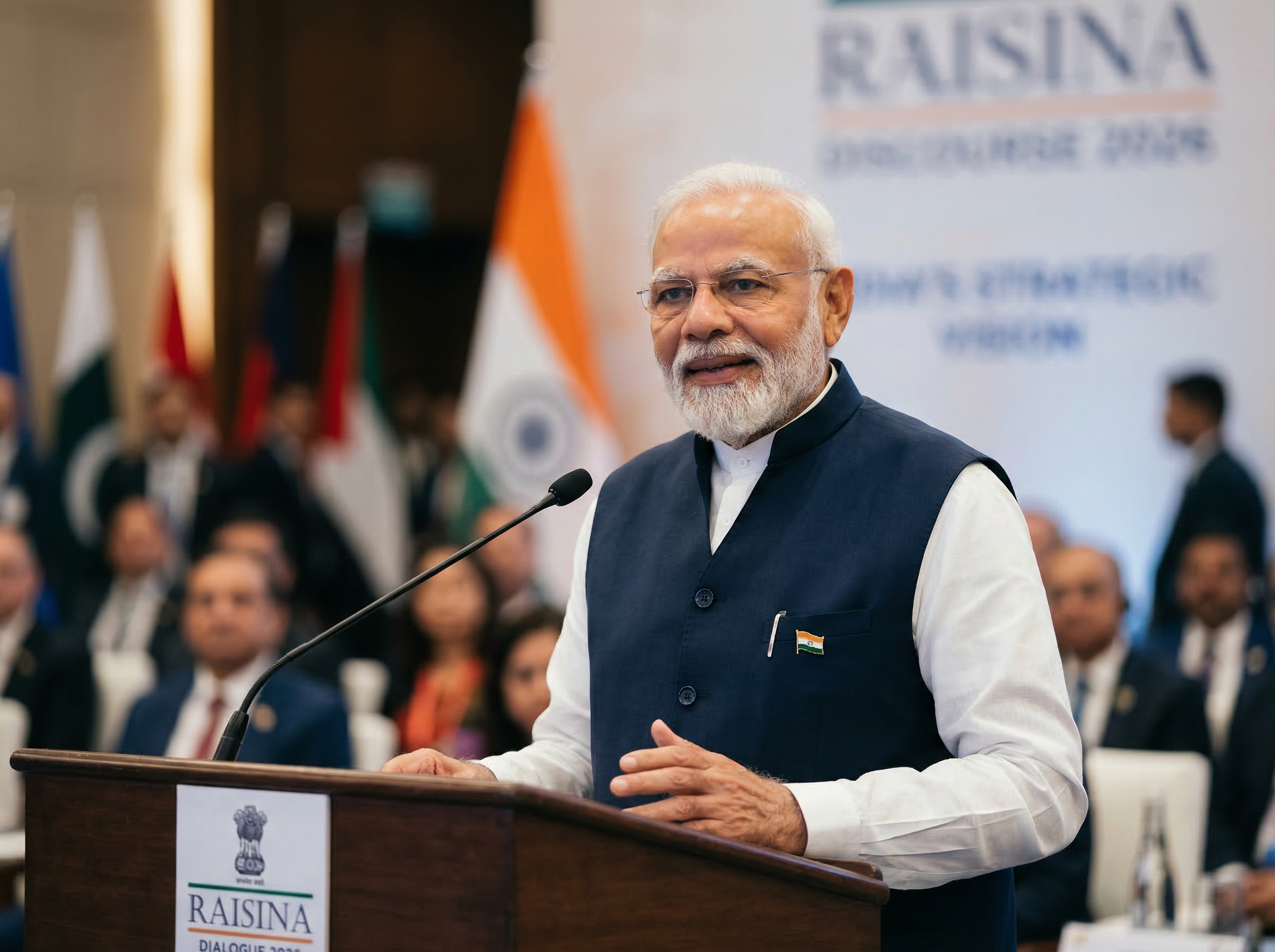
Prime Minister Modi at Raisina Dialogue 2026 — New Delhi
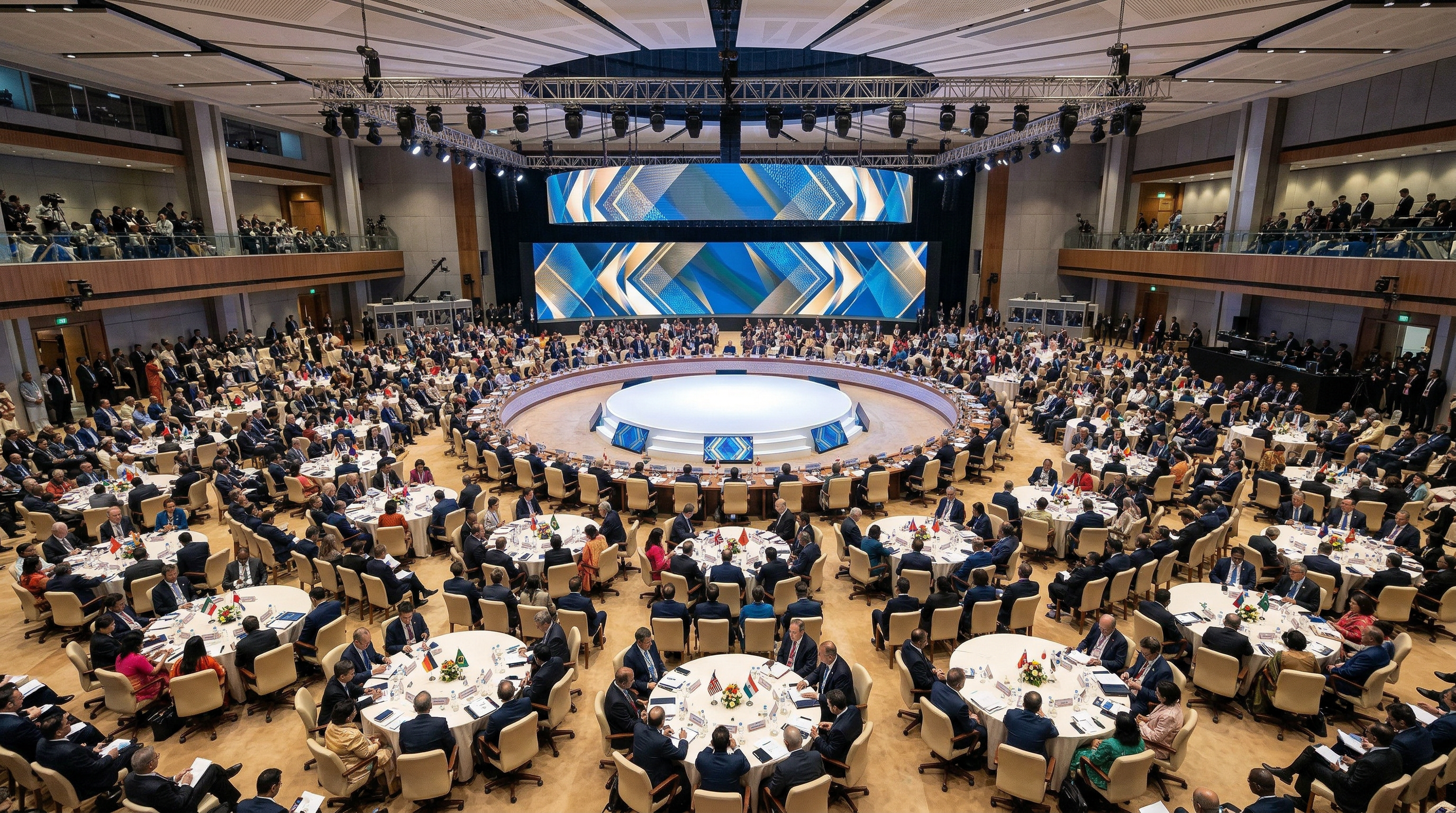
The Raisina Dialogue is perceived as India's 'flagship' conference on 'Geopolitics' and'geo-economics,' organized annually in India's capital city by the Observer Research Foundation (ORF) in association with India's Ministry of External Affairs (MEA). The strategic importance of Raisina Dialogue resides in its ability to assemble global leadership, academia, and experts in a discussion on the evolving nature of power, prosperity, and security globally.
The 2026 Raisina Dialogue (5–7th March 2026) coincides with a global scenario where the global architecture is influenced by 'sharper strategic competition,' 'supply chain politics,''tariff politics,' and 'frontier technologies.' Raisina Dialogue is a globally relevant platform because it provides a space for 'major power' and 'Global South' strategic dialogue.
Overview and Thematic Pillars
The MEA also announced that the theme for 2026 is “Samskara” - Assertion, Accommodation, Advancement, and the conference is organized around six pillars: Contested Frontiers, Repairing the commons, White Whale - Agenda 2030, The Eleventh Hour - Climate, Conflict, Tomorrowland - Technology, and Trade in the Time of Tariffs.
From an analytical perspective, the pillars represent a world in which security dilemma is linked to development and governance stress, and economic policy is becoming ever more strategic in character. Contested frontiers and repairing the commons represent a dual reality in which states are asserting their sovereignty and influence, yet also need to agree rules on climate change, maritime security, financial stability, and technology, etc. The inclusion of technology and tariffs in the conference themes, however, also reflects the idea that the "substance" of the debate in global governance is now located at the intersection of regulation, competitiveness, and security.
“Our goal is to be a responsible and constructive global partner in a complex world.”
— Prime Minister Narendra Modi, Raisina Dialogue 2026
India's Diplomatic Vision and Modi's Position
In the backdrop of Raisina Dialogue 2026, the Indian foreign policy perspective has been reflected through the leadership provided by Modi in India's foreign policy. In his opening remarks at the dialogue, Modi stated, “Our goal is to be a responsible and constructive global partner in a complex world.” Modi further stated, “We are a nation of a billion people, but we aspire to be a Vishwa Mitra, a friend to the world, a force of cooperation, not confrontation, in global affairs.” In this backdrop, Modi tried to create a bridge between the South and the North in the world through his advocacy of the need for a new multilateralism.
The address also highlighted India's commitment to strategic autonomy by facilitating its engagement in partnership with several global actors without compromising its autonomy in decision-making. Modi's reference to the principle of civilization that affirms Vasudhaiva Kutumbukum — or the world is one family — emphasized India's belief in addressing global issues like climate change, global technology governance, and economic security in partnership with several global actors. Therefore, India's message at the Dialogue projected it as a stabilizing actor in a rapidly changing world of multipolarity.
“We are a nation of a billion people, but we aspire to be a Vishwa Mitra — a friend to the world.”
— Prime Minister Narendra Modi
US Perspective and Strategic Implications
During Raisina Dialogue 2026, Christopher Landau, the Deputy Secretary of State of the United States of America, mentioned the changing priorities of America's foreign policy. He emphasized the fact that America's foreign policy is based on the principle of 'reciprocity' and 'mutual benefits' in relations with other nations. He emphasized the importance of 'Economic Cooperation and Trade' between America and India and showed his optimism about the increase in trade relations between the two nations. He mentioned India as a country of 'considerable strategic and economic potential' and showed the importance of the emergence of India for the world order in the 21st century. Other than the dialogue between India and the US, the dialogue also involved the perspective of European countries, the Indo-Pacific, and the global South.
The dialogue from the European countries was centered on the need for the development of technology and economic resilience in an uncertain global setting. The dialogue from the Indo-Pacific was centered on the need for security in the strategic waters. Lastly, the dialogue from the global South was centered on the need for the development and addressing of the longstanding issues such as development finance, climate justice, and access to the latest technologies. This is because, in recent times, it has become very obvious that the solutions to global issues cannot be addressed by the few powerful countries in the world. Rather, the participation of more countries is required in order to develop a well-rounded solution to the problems at hand. In this context, it can be said that the Raisina dialogue is evolving into a platform where the perspectives from all over the world can be brought together in order to ensure the coming together of the old and the new powers in order to develop the new world order.
Strategic Impact and Possible Outcomes
The impact of Raisina Dialogue may also be indirect in nature, as it may influence policy debates, detect opportunities for cooperation, and draw attention to new issues in global politics. The pillars of 2026 also imply some indirect effects in three policy areas: First, debates in technology governance, particularly in AI, Digital Infrastructure & Standards, may increase as countries pursue innovation and security in these areas, which are increasingly becoming geopolitical assets themselves. Secondly, the specific mention of tariffs and resilience implies the growing salience of economic security in international relations and the use of trade and industry as tools for strategic security. Thirdly, the inclusion and concerns of the global South could be more formally enshrined in the changes in multilateralism, development finance, and adaptation measures — areas relevant not only to the global South but also to the legitimacy and effectiveness of multilateral systems. The stakeholders who would be impacted the most by this change in the agenda would be the Indo-Pacific stakeholders, the global South economies, and the multilateral systems.
2026 Conference Pillars — Theme: Samskara
Contested Frontiers
Repairing the Commons
White Whale — Agenda 2030
The Eleventh Hour — Climate & Conflict
Tomorrowland — Technology
Trade in the Time of Tariffs
Comparative Analysis (Raisina vs Davos vs Munich)
Compared with the World Economic Forum (Davos), Raisina is less centered on corporate-led economic coordination and structured around the strategic interaction of politics, economics and security. Compared with the Munich Security Conference, Raisina is less narrowly defense focused and more hybrid, placing climate-security, technology, governance and geoeconomics alongside traditional security questions.
In terms of influence, Davos often shapes agendas through market signaling and elite economic networks, while Munich's weight comes from concentrated security dialogue among alliance leaders and defense establishments. Raisina's distinct contribution is that it blends these domains through an Indian-hosted platform, giving India a greater role in curating conversations that connect development priorities with strategic debates. India's role is therefore not only participatory but also institutional and agenda-setting, reinforcing Raisina as a platform with its own identity rather than an extension of Western economic or security conferences.
Conclusion
Raisina Dialogue 2026 demonstrates the growing importance of convening platforms in a multipolar world where agreements are harder to reach, yet strategic communication and coalition-building remain essential. By structuring debates around sovereignty and accommodation, technology and tariffs, climate and conflicts, Raisina helps policymakers and analysts interpret how competition and cooperation will coexist.
Its strategic value lies in creating a space for dialogue that can reduce misunderstanding, surface trade-offs and support practical cooperation — especially between major powers and the global South — without requiring uniformity of views.
Keywords
Raisina Dialogue 2026, India's diplomatic vision, Indo-US strategic partnership
PUBLISHED IN CMCG COMMENTARY · CASA MARGO COMMUNICATIONS GROUP
Article Written By
Suman Keshanti
Political Scientist · International Relations
Suman Keshanti holds an academic background in political science and writes on international relations and global strategic affairs.