The Present Ebola Crisis: Why the World Cannot Look Away
The Present Ebola Crisis: Why the World Cannot Look Away
By Dr. Aqsa Munir
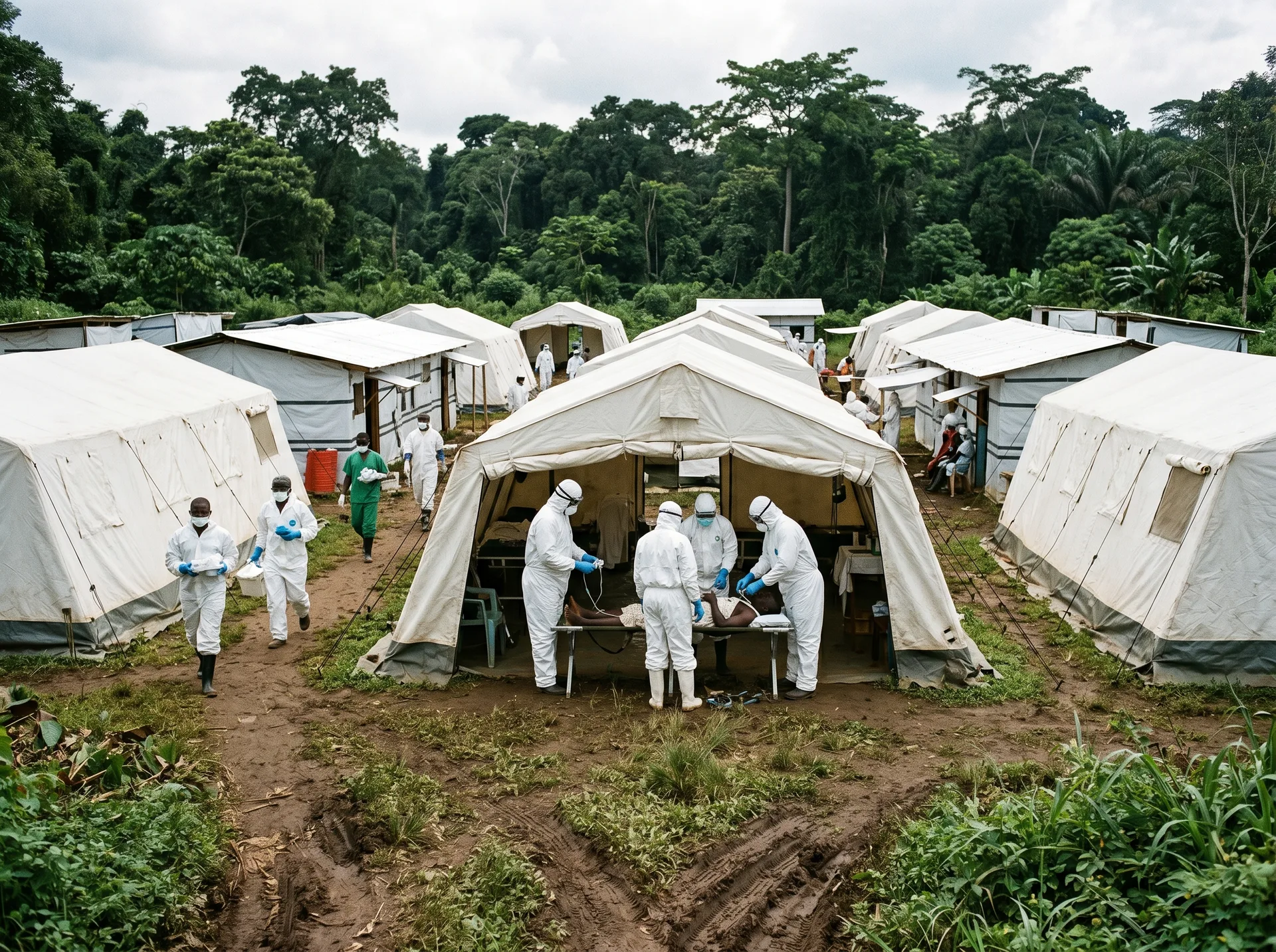
The current Ebola epidemic spreading through the Democratic Republic of Congo and Uganda is a clear warning to the world. It is caused by the Bundibugyo strain of the virus. This form of Ebola is dangerous, as there is neither an approved vaccine nor any treatment for it.
Ebola does not spread easily like the flu, but is lethal when the disease enters families, health centres, or local communities. The outbreak should not be perceived solely as an African problem. Ebola is an inherently global health challenge; it travels via humans, health systems are interconnected, and when a local epidemic is neglected, it can quickly escalate.
What is Happening Now?
By late May 2026, the number of reported Ebola cases had climbed significantly. According to Reuters, the Democratic Republic of Congo recorded 282 verified cases, with 42 known deaths. Ituri Province was reported to have the highest number of infections, although cases were confirmed in Uganda, as well. The WHO expressed its concern about the effects of poor information and unsanitary burial practices on the spread of the virus.
Although alarming, these numbers are probably lower than the actual toll of the epidemic. Ebola outbreaks can occur in remote areas with limited diagnostic capacity, and some infected individuals die before reaching medical facilities. Others may try to conceal their symptoms to avoid quarantine and the social stigma associated with the disease.
How Many Could Be Affected?
While verified cases are in the hundreds, the number of people indirectly affected could be significantly larger. This does not necessarily mean millions will contract Ebola, but rather millions will live under a shadow of fear, subject to border controls, clinics under strain, reduced income, and pressure on their healthcare systems. In eastern Congo, already fractured by conflict, poverty, and widespread displacement, a high concentration of people living in close proximity makes contact tracing and patient isolation far more difficult. Should the epidemic not be contained quickly, it is likely to spread from hundreds to thousands, impacting millions in Congo, Uganda, and neighboring nations.
Why is it a Global Problem?
The problem of Ebola requires a global perspective for three main reasons:
1. Disease transcends borders. The outbreak in Uganda demonstrates that an epidemic is not confined to a single nation. Several suspected travel-linked cases have also been investigated outside of Africa, although many later tested negative for Ebola.
2. Weak health systems affect everyone. Ebola has devastating effects on the health professionals who confront it. Should medical personnel fall ill, routine care is inevitably compromised, leading to an increase in deaths from other diseases.
3. We have been in this situation before. The Ebola epidemic in West Africa and, more recently, the COVID-19 pandemic show us that idleness is both deadly and costly. Early intervention is more affordable and far safer than dealing with later panic.
How the Crisis Might Have Been Avoided
It may not always be possible to prevent the first case of Ebola itself, as it arises from contact with infected animals. However, the size of the epidemic might have been reduced through the early detection of cases in strengthened local health systems, quicker diagnosis at faster diagnostic centres, and swifter contact tracing by more available health workers. Bundibugyo Ebola has been known for years, but there still remains no approved vaccine or treatment for it. Diseases that pose a threat to poorer countries are generally underfunded. Better preparation could have involved regular outbreak drills, improved border health officials, more sophisticated clinics, safer personal protective equipment, greater local education, and stable funding.
Trump's Response
Donald Trump's reaction deserves both commendation and critique. On the plus side, the US has contributed funding, personnel from the Center for Disease Control and Prevention (CDC), airport health screening, and medical aid to Ebola treatment centers. These are vital components of a well-staffed, properly-resourced clinic.
The downside is that the response seems focused primarily on ensuring that the virus does not reach American soil, and travel restrictions, while seemingly stringent, are hardly the definitive solution. The WHO has spoken out against unwarranted restrictions on trade and travel, as they may encourage stigma and deter countries from reporting outbreaks in the future. The most logical way of combating it is not through travelers entering or leaving the country but through aiding the affected countries to get a handle on the outbreak swiftly.
“The most logical way of combating Ebola is not through travelers entering or leaving the country but through aiding the affected countries to get a handle on the outbreak swiftly.”
Dr. Aqsa Munir
What Other Countries Should Do
Nations should take rapid, practical action. Rich nations should provide not only funds but also PPE, portable diagnostic centres, transport ambulances, sanitation, and skilled teams. They should work with the WHO, Africa CDC, local health ministries, and aid organizations such as Médecins Sans Frontières and the Red Cross. Political infighting and other conflicts should not stand in the way of assistance. States should refrain from casting blame and fostering stigmas; this has been a key contributor to previous epidemics escalating beyond control.
The Bottom Line
The current Ebola epidemic should be seen as a crucial test of international responsibility. We already have the tools to combat such an outbreak. We also know that indecisiveness and delayed action lead to disastrous outcomes. This epidemic can still be brought under control, but only through immediate government cooperation. Ultimately, this fight is not just about saving lives in Congo and Uganda but about demonstrating to the world that effective global health security can only be achieved through early and fair intervention at the point of origin.
Dr. Aqsa Munir is a contributor to Aguilar Commentary, providing independent analysis on global affairs, humanitarian policy, and international development.
Her research examines the intersection of global health security, humanitarian policy, and geopolitical decision-making, with a focus on the impact of crises on vulnerable populations in low-income countries.
Focus Areas
- Global Health Security
- Humanitarian Policy
- Infectious Disease
- International Development