Stop Pretending Birthright Citizenship Is a Crisis
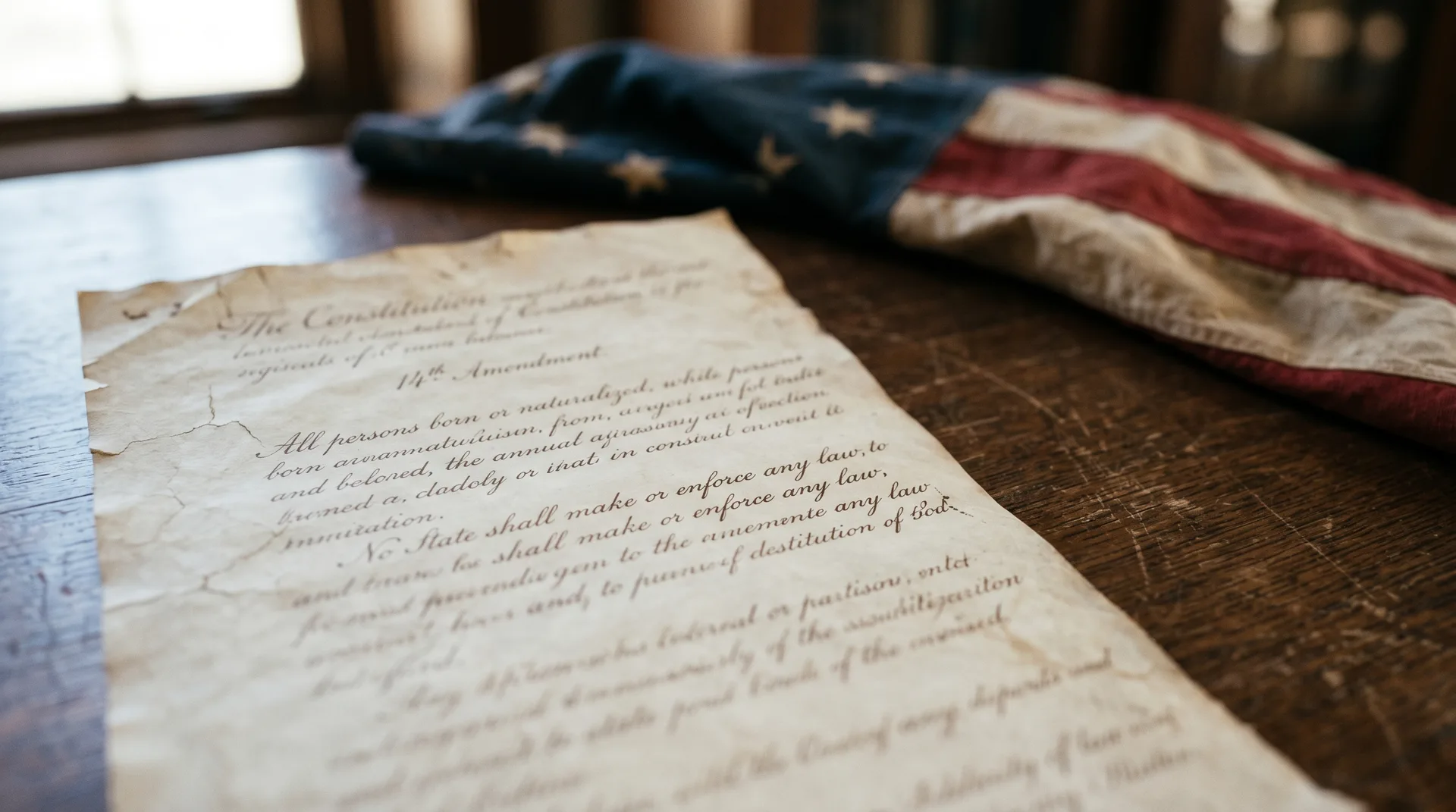
As America celebrates its 250th birthday, the debate over the 14th Amendment and birthright citizenship has returned to center stage. But is it really a constitutional crisis, or a political power struggle?
As the nation celebrates its 250th birthday, the issue of who should count as a citizen is once again front and center in American discourse about the 14th Amendment. Those who claim the initial purpose of the 14th Amendment was about granting citizenship to former slaves, their progeny, and to overturn the horrendous Dred Scott decision are correct. For those who claim that the 14th Amendment ended there are wrong. As subsequent court decisions such as United States vs. Wong Kim Ark made clear, the original decision, ratified in 1868, was expanded to include anyone born on American soil not subject to foreign jurisdiction. Despite the Supreme Court ruling, others such as John Eastman argue that children of undocumented immigrants are not fully under US jurisdiction.
The Civilization Survival Argument
The issue of civilization survival has been cited as the rationale for curbing birthright citizenship. Samuel Huntington, the author of Clash of Civilizations, was wrong in his analysis and predictions, but commentators such as Victor Hanson, Niall Ferguson, Patrick Buchanan, Senator Tom Cotton, and Steve Bannon are proponents of his arguments. Wisconsin Senator Ron Johnson laid out this sentiment when he said: "Birthright citizenship tourism, this is going to destroy the country creating all these billions of voters. They will obviously not be voting in the best interest of America, so we have to understand exactly what the left is doing, what China is doing, what we need to act now to prevent that."
Looking back at the speech by Secretary of State Marco Rubio at the Munich Security Council, it had elements of the civilization survival argument as well. His constant use of the word civilization seemed to recall Huntington's concerns. Huntington believed that future conflicts would be cultural, rather than economic or ideological. Rubio's backhanded attack on immigration was wrong when he said "it is an urgent threat to the fabric of our societies and the survival of our civilization itself" — seemingly more geared towards the right-wing aspects of America and Europe, including Hungary's Viktor Orban, who recently lost his bid for re-election despite support from the Trump administration.
“Despite a so-called shared civilization, prior to the end of WW II, major European powers were constantly at war with one another.”
Power, Not Culture, Drives Conflict
In America, attempts to change the fabric of American democracy often came from within. It was Minnesota Senator Ernest Lundeen who used his office to disseminate Nazi propaganda, or the convicted January 6th defendants, who attempted to overturn an election.
Nations do not exist to defend civilizations but rather their own self interest as a sovereign entity — whether economically, culturally, or militarily. In the case of America, it is to maintain its worldwide hegemony. Political scientist and international relations scholar John Mearsheimer is correct when he suggests that it is power that drives conflict, not culture, when he said: "States care about the balance of power not ideology or culture." The Cold War was not about ideology but the balance of power.
The Real Issue: Who Wields Political Power
Despite protestations by various American pundits, the present challenge to the 14th Amendment is not about civilizational superiority. While the idea of Renaud Camus' debunked great replacement theory has currency, it is about who gets to wield political power and who to cast aspersions on as a liability to society. The great replacement theory plays a cultural role in rallying the masses about birthright citizenship, yet the real issue is who will yield power in the United States.
Edmund Burke believed in a limited electorate based on who has a stake primarily through property. While it can be argued that Burke was not looking to deprive people of having a say in their government, it would be hard to make the same claim about today's proponents of ending birthright citizenship.
A Global Perspective
The issue of birthright citizenship is not solely an American issue. While most nations do not have birthright citizenship, Canada, Mexico, Brazil, Argentina, Chile, Peru, Venezuela, and most countries in Central and South America do. Ireland amended their constitution to do away with birthright citizenship. In ancient Rome, initially only people from Rome were considered citizens, but under the rule of Emperor Caracalla this was expanded to include all free people. It is the United States, however, that in welcoming different people to its shores, has enabled it to become the most powerful nation on earth.
Despite its history and current examples of xenophobia, including Islamophobia and discriminatory practices, America has proven to be a nation where a variety of cultures, even in the midst of sporadic tensions, can exist in relative peace and calm. America, in spite of its history, has created a world vision — while not fully implemented, it is still in effect today. It is a vision built on the Declaration of Independence which says: "We hold these truths to be self-evident, that all men are created equal, that they are endowed by their Creator with certain unalienable Rights, that among these are Life, Liberty and the pursuit of Happiness."
Sovereign nations have the right to determine citizenship, but Ronald Reagan was right when he said "if we ever close the door to new Americans, our leadership in the world would soon be lost." The issue of how American citizenship is determined will again be settled by the Supreme Court, but culturally and socially it will always be a point of contention.
About the Author
Tony Aguilar is the founder of Casa Margo Communications Group and a veteran political analyst and commentator specializing in international affairs, democracy, and U.S. foreign policy.