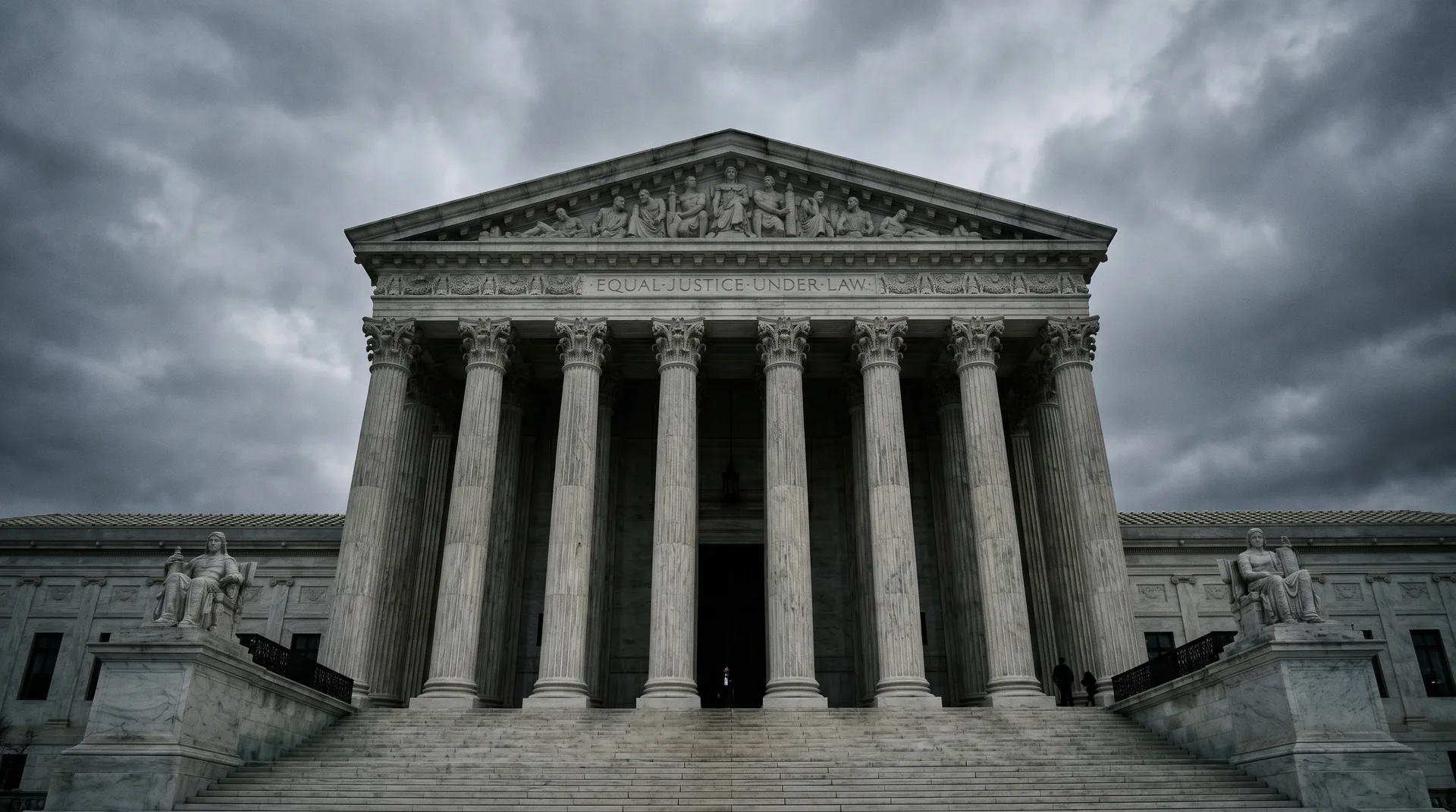
From Carter Glass to Roberts and Alito: The Enduring Struggle Over Voting Rights in America
Almost one hundred years after Senator Carter Glass declared his intent to remove every Black voter possible, the goal may not be coming to full fruition - but limiting its efficacy may be.
When asked in 1928, Carter Glass, Democratic Senator from Virginia and prominent in the creation of the Federal Reserve Board, said the following about whether the poll tax was discriminatory against the Black vote: "Discrimination! Why, that is exactly what we propose. To remove every Negro voter who can be gotten rid of legally, without materially impairing the numerical strength of the white electorate. The Southern states spit upon the Fifteenth Amendment, the South, has no intention of letting the Negro vote."
Almost one hundred years later, the goal enunciated by Senator Glass may not be coming to fruition but limiting its efficacy may be.
“Discrimination! Why, that is exactly what we propose. To remove every Negro voter who can be gotten rid of legally...”
Senator Carter Glass, 1928
Roberts and the Voting Rights Act
Since his start in 1982, as a lawyer with the Reagan administration, Chief Justice John Roberts' goal has been the elimination of the 1965 Voting Rights Act. Little by little both Roberts and Justice Samuel Alito have spearheaded the dismantling of what many consider to be the crown jewel of the civil rights era.
In 2013, Roberts wrote the majority opinion in Shelby v. Holder which struck down section 4 of the Voting Rights Act which "determined which states and jurisdictions with a history of racial discrimination, were required to get federal clearance before changing their election laws." In writing his opinion, Roberts stated that"conditions have changed." It is easy to understand the angst expressed by the Black community. The Voting Rights Act was only in existence for sixty years which is considerably less than voting rights were denied to the Black community through various measures.
Alito's Rulings and the Death Knell
In 2021, Justice Alito wrote the majority opinion on Brnovich v. Democratic National Convention which curtailed section 2 of the Voting Rights Act.
In what seems to be the death knell of the Voting Rights Act, Justice Alito also wrote the majority opinion for Louisiana v. Callais. In writing the majority opinion, Alito depended upon erroneous information pertaining to Black voter turnout.
It would be hard and perhaps disingenuous to suggest that Roberts and maybe Alito have the same disdain for voting rights that Senator Glass displayed in 1928. Nonetheless, the result is the same.
A Legacy of Restriction
It must be remembered that Roberts clerked under Chief Justice William Rehnquist, who despite his membership in the liberal Christian denomination Evangelical Lutheran Church in America, is most remembered for his time as a law clerk under Justice Robert Jackson, when he wrote a memo defending Plessy v. Ferguson which upheld the doctrine of separate but equal.
Present Efforts to Dilute the Vote
While many people erroneously believe the effort to curtail voting power is from a bygone era, present efforts show that it is not. As soon as the decision was announced, the state of Louisiana, Alabama, Tennessee and Mississippi immediately redrew their maps which eliminated majority Black districts within their states. The attempt to dilute if not abolish the efficacy of the non-white vote has been evident ever since the adoption of the 14th and 15th amendment. Despite progress, the sentiment of Senator Carter Glass remains.
What Can Be Done
The question becomes what should be the response to what is seen as an egregious attack on hard fought for voting rights and representation. Supreme Court decisions are not always permanent. It must be remembered that Brown v. Board of Education overturned Plessy v. Ferguson, the 14th amendment overturned Dred Scott, and Dobbs overturned Roe v. Wade.
If they regain the House and the Senate, Democrats could pass the John Lewis Voting Rights Advancement Act of 2025. The bill remains active although it remains in committee. The second thing they can do is to pass the Redistricting Reform Act of 2024, introduced by Senator Amy Klobuchar, which would outlaw districting attempts that favor or disfavor one party.
The Supreme Court under Roberts and Alito has dealt a tremendous blow to the voting rights of minority communities. The enduring struggle that began long before Carter Glass spoke those words in 1928 continues today, and the response must be equally persistent and determined.
American democracy is not based on one party being able to prohibit another party from competing. When political parties are in a position to select their voters rather than voters selecting their representatives, then democracy is under threat - it is up to the electorate to correct.
The next several years will be a test of American democracy but ultimately the electorate will determine what kind of nation the United States will be.
About the Author
Tony Aguilar is the founder of Casa Margo Communications Group and a veteran political analyst and commentator specializing in international affairs, democracy, and U.S. foreign policy.