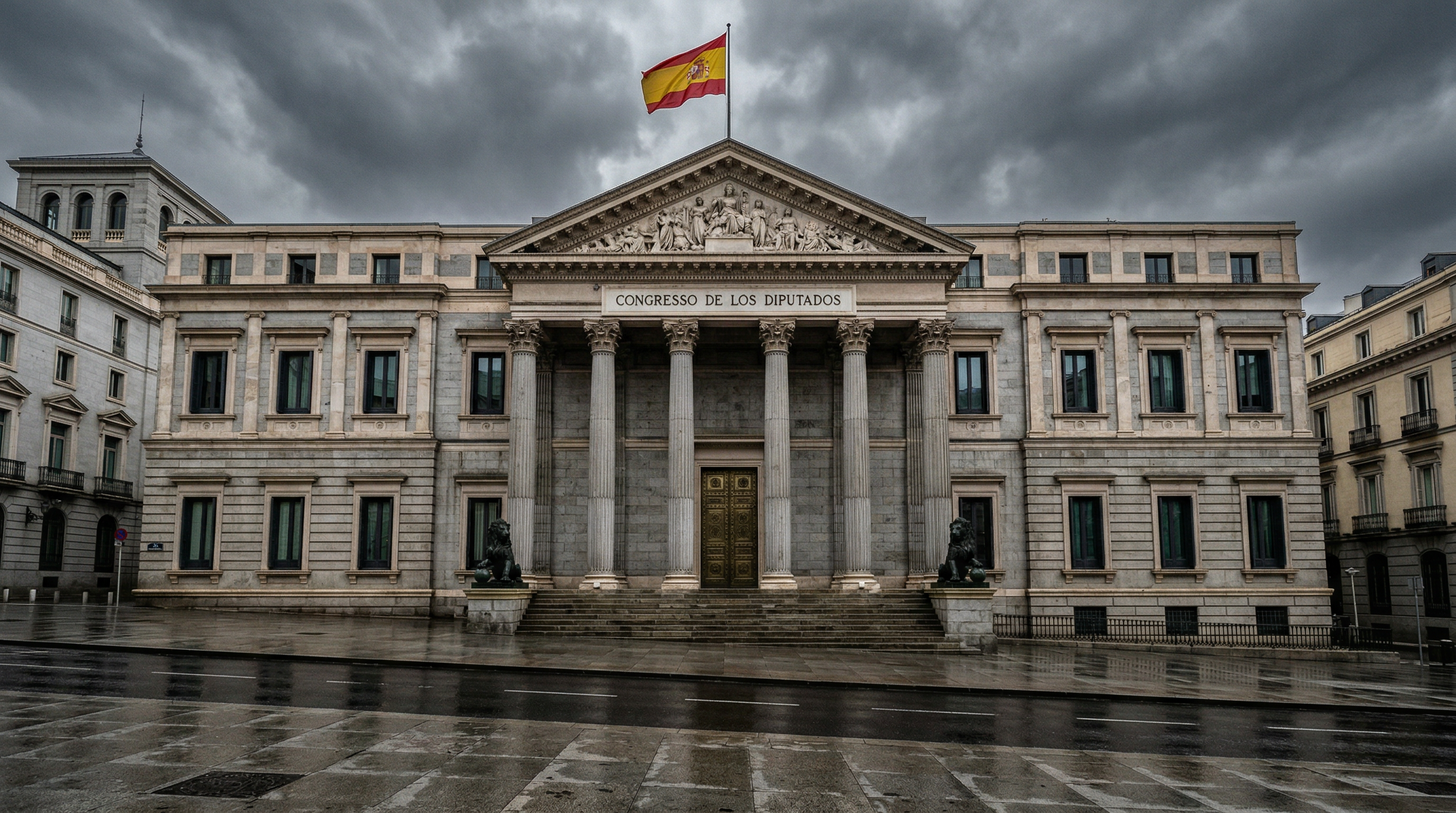
A Master of Survival: Pedro Sánchez's Multi-Front Political Struggle
Introduction
Spain is navigating a complex and volatile political landscape, with Prime Minister Pedro Sánchez at the center of mounting domestic and international pressures. Growing political polarization, public dissatisfaction that has fueled calls for early elections, corruption allegations, protests, and renewed tensions over Catalan independence have all placed his leadership under strain. His foreign policy positioning, including a critical stance toward Donald Trump, further reflects an attempt to balance Spain's role within a shifting global order.
This article examines the key challenges facing Sánchez, evaluates the resilience of his government, and assesses his prospects for political survival.
The Domestic Tightrope: Catalonia, Protests, and the Price of Power
One of the most controversial aspects of Sánchez's domestic strategy has been the Amnesty Law for Institutional, Political, and Social Normalization in Catalonia. He presented this legislation as an attempt to secure long-lasting reconciliation.
The amnesty allows Carles Puigdemont, the former president of the Generalitat, to return to Spain without the threat of arrest. The legislation was approved in May 2024 and, to some extent, helped Sánchez's allies perform better in the Catalan regional elections, with separatist parties losing their parliamentary majority.
However, this policy has come at a high political cost. The opposition Partido Popular (PP) has accused Sánchez of using the law purely to keep his fragile government alive and to increase his political support from regional parties such as Junts per Catalunya and Republican Left of Catalonia (ERC). The PP's leader, Alberto Núñez Feijóo, said the amnesty "divides Catalonia and Spain in two" (Hedgecoe, 2024).
More broadly, the opposition argues that Sánchez betrayed the nation, violated the Constitution, and interfered in the judiciary. As a result, the PP organized protests, highlighting that a significant part of Spanish society remains unwilling to forgive the separatists who caused the constitutional crisis in 2017-2018. Yet, the deal has deepened Sánchez's dependence on political support from Catalonia, leaving his government vulnerable to local turbulence and political bargaining.
The Specter of Corruption
Corruption scandals have further weakened the stability of Sánchez's PSOE government. One notable issue is the Koldo case involving illegal commissions for mask procurement during the pandemic by a trusted aide to former minister José Luis Ábalos. Another case involves Leire Díez, who is accused of coordinating a bribery and public contract fraud network linked to the state holding company SEPI. People in Sánchez's immediate circle, including his brother and wife, are being investigated for corruption-related offenses (Esteve, 2025).
While Sánchez has praised the judiciary for tackling corruption, V-Dem (2026) data show that the political corruption index increased from 0.04 in 2018, when he took office, to 0.11 in 2025, which represents approximately a 175% growth (on a scale from 0 to 1, where 1 means maximum corruption). Between 2018 and 2025, Spain's clientelism index increased by 42.86%, rising from 0.07 to 0.1. Spain also ranked 46th out of 180 countries in the 2024 Corruption Perceptions Index, down 10 places in a single year. Political polarization increased by 36% during the same period (Casal Bértoa & Olivas Osuna, 2025).
These trends point to growing fragility in Sánchez's government. For example, the rise in clientelism reflects increasing reliance on concessions to regional and separatist parties (including EH Bildu in the Basque Country).
Nevertheless, polarization may paradoxically strengthen Sánchez's resilience. For a segment of the electorate, the prospect of a PP-Vox coalition may act as a mobilizing force in Sánchez's favor.
Yet, this dissatisfaction has also manifested in protests. In May 2025, thousands of protesters affiliated with PP and Vox gathered in Madrid to voice their opposition to the government and its handling of corruption cases. They have called for Sánchez's resignation and early elections (La Sexta, 2025).
Projecting Power Abroad: Gibraltar and Trump
Sánchez's foreign policy attempts to project stability abroad while offsetting domestic fragility. The Gibraltar agreement, which aims to create a "zone of shared prosperity" by removing border barriers and integrating the territory into the Schengen Area, is presented as a diplomatic success. Vice President María Jesús Montero described the progress as "magnificent news for the province of Cádiz" (Murcia Today, 2026).
Yet, Spanish analyst and conservative politician Gustavo de Arístegui called it a strategic surrender. Arístegui argues that the "agreement consolidates Gibraltar's position while offering Spain very limited gains", and "nothing has been achieved regarding Spain's historic claim to sovereignty" (de Arístegui, 2025). Although the deal would scrap the ID checks for 15,000 Spaniards who work in Gibraltar, the opposition called it a political sell-out, with Feijóo asserting that the PP "will not cease to demand sovereignty over Gibraltar" (Fernández-Pontes, 2025).
In contrast, Sánchez's stance toward Donald Trump is more confrontational and tied to internal political calculations. The two leaders clashed over Spain's refusal to raise NATO spending above 2% of GDP, opposition to Israel's actions in Gaza, and refusal to support the US war in Iran. Sánchez reaffirmed his position by stating, "NO to violations of international law" (Quiviger, 2026). This stance largely reflects Spain's anti-war culture, an unwillingness to be drawn into another conflict, and awareness of the domestic political costs. To a certain extent, this strategy has proven effective: Trump remains unpopular in Spain (77% disapproval, according to YouGov, 2026), and the PSOE recently gained two additional seats in regional elections in Castilla y León.
The US-Iran conflict has boosted Sánchez's approval ratings while putting the PP in a tough spot. Supporting the US risks domestic backlash, whereas opposing it allows Sánchez to dominate. The prominence of the conflict in public debate has also shifted attention away from domestic controversies. Moreover, higher defense spending lacks majority support in Spain, reinforcing Sánchez's position (Quiviger, 2026).
“Sánchez is likely to remain in power in the short term, despite his position remaining structurally fragile. He is likely to continue governing in a state of managed instability, where political survival depends on ongoing negotiation and political trade-offs.”
Conclusion: Assessment of Survival
Taken together, these challenges place Sánchez under increasing pressure, but do not point to an immediate collapse. Domestically, his reliance on fragile alliances, controversial concessions on Catalonia, and corruption scandals have weakened his political standing. Nevertheless, the PP relies on the far-right Vox party to govern, which weakens its position relative to Sánchez.
Sánchez has repeatedly demonstrated a capacity for political survival by adapting to shifting conditions and leveraging divisions within both the opposition and the electorate. His foreign policy stance has provided short-term domestic advantages. It aligns with the majority of the Spanish population and diverts attention from internal crises.
Bibliography
- Casal Bértoa, F., Olivas Osuna, J. J. (2025). Spain under Pedro Sánchez - from democratic regeneration to degeneration. LSE European Politics.
- De Arístegui, G. (2025). Critical Analysis of the Gibraltar Agreement: A Strategic Surrender with Profound Implications. Gustavo de Aristegui.
- Esteve, M. (2025). Why is this Pedro Sánchez's most serious crisis so far? Ara.
- Fernández-Pontes, I. (2025). Gibraltar-Spain border to vanish in 2026 under post-Brexit deal. Euractiv.
- Hedgecoe, G. (2024). Relief for Pedro Sánchez as Spanish government's Catalan amnesty bill clears major hurdle in parliament. Politico.
- La Sexta (2025). PP y Vox unen fuerzas en una manifestación contra Pedro Sánchez y un "Gobierno fallido".
- Quiviger, W. (2026). Spain-US rift: Pedro Sánchez' defiance of Trump is dictated by domestic politics. The Conversation.
- V-Dem Institute & Our World in Data (2026). Political Corruption Index, 2025.
- YouGov (2026). How popular is Donald Trump in Europe? January 2026.
About the Author
Alexandra Eleferenko is a geopolitical analyst and independent researcher holding a Master's degree in International Relations from IE University, with a specialization in Global Governance and International Cooperation. Her research focuses primarily on Russia, digital diplomacy, and the strategic use of sports diplomacy. From 2021 to 2024, she served as a contributing writer for the IE International Policy Review.