Facade of Democracy: Congo's President Secures Fifth Term, Extending 42-Year Rule
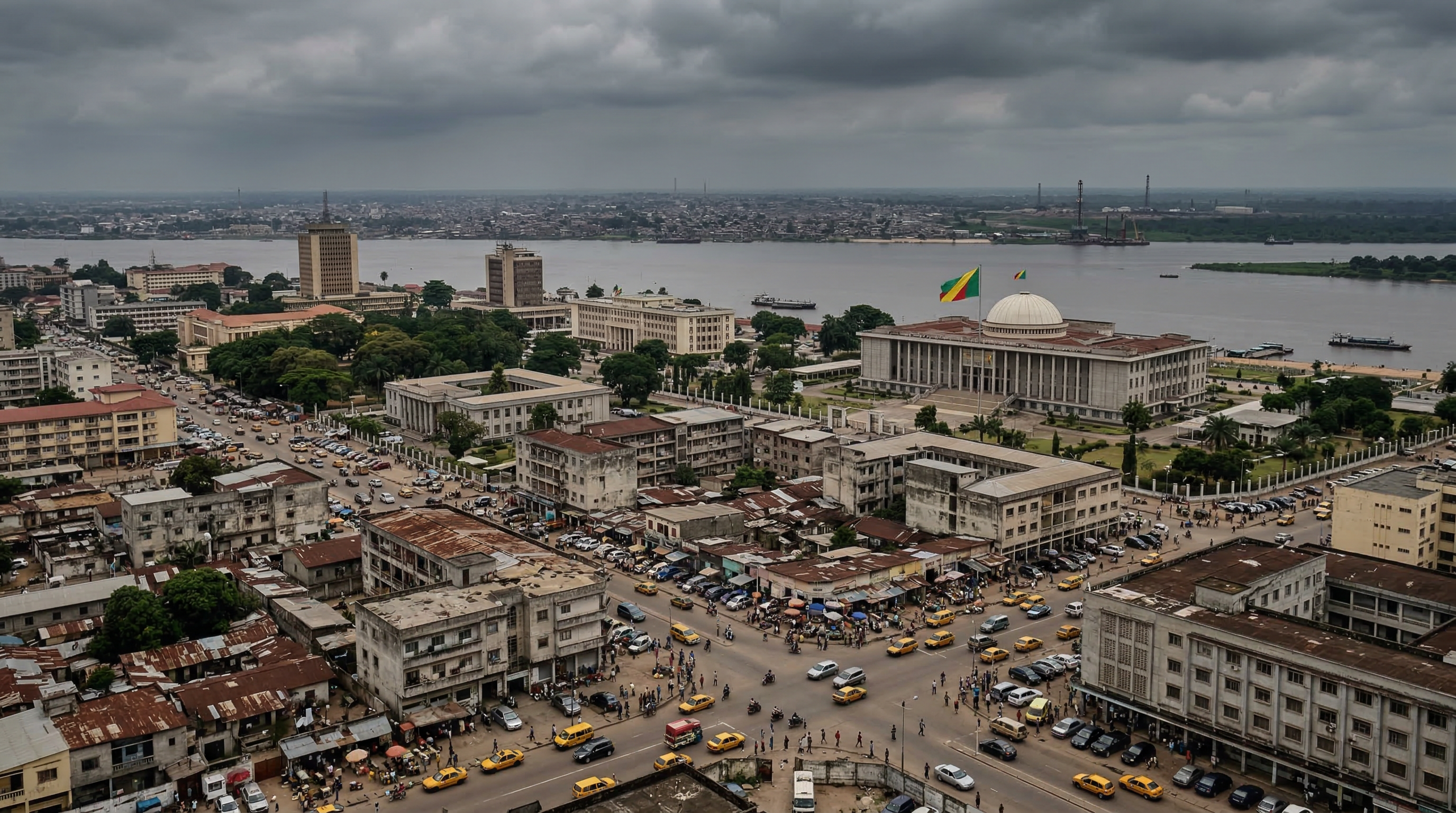
Congo Republic's incumbent President Denis Sassou Nguesso has secured another five-year term under the ruling Labour party, in a result critics termed a "Scandalous Charade."
From the onset, the 82-year-old, who has ruled the oil-rich Central African nation for 42 of 47 years, was expected to win the March 15 presidential election, given his regime's strong-armed tactics for silencing dissent and suppressing opposition parties.
According to provisional results shown on Tuesday, March 17, the 82-year-old strongman secured 94.82% of the vote, despite boycotts, internet blackouts, and deep public disillusionment. Interior Minister Raymond Zephirin Mboulou announced the figures on state television late Monday, reporting an official turnout of 84.65% among 3.2 million registered voters.
The closest challenger, Mabio Mavoungou Zinga of the Alliance party — a retired customs inspector and former lawmaker — received just 1.48%. Independent Uphrem Dave Mafoula trailed with 1.03%, while the remaining four obscure candidates each garnered less than 1%.
The results, which must be certified by the Constitutional Court, handed Sassou Nguesso a fifth consecutive term since his return to power in 1997, cementing his status as one of Africa's longest-serving leaders.
Sassou Nguesso reacted with characteristic confidence from his party headquarters in Brazzaville, promising to keep his word. "By re-electing me by a landslide, the people have kept their word. Now it is up to us to keep ours," he told reporters. "We promise to commit ourselves fully to doing everything possible," he added, hailing the reported turnout as proof of the population's "civic-mindedness" and "patriotism."
No immediate concession came from Zinga, but major opposition groups that boycotted the March 15 poll dismissed the outcome as predetermined. "This was never an election; it was a coronation," one boycotting leader told local media, speaking on condition of anonymity for fear of reprisal.
'Facade of Democracy'
While President Denis Sassou Nguesso celebrated his win, the outcome was largely obvious, with prominent opposition leaders in jail, a nationwide internet outage that slashed connectivity to near-zero on voting day, hampering independent monitoring. Traffic restrictions in the capital also fueled suspicions of manipulation, prompting critics to question the legitimacy of the process and the outcome.
Although Prime Minister Anatole Collinet Makosso insisted oversight mechanisms ensured transparency, analysts and civil society described a "facade of democracy" in a country ranked near the bottom on global indices for political freedoms and corruption.
Many voters expressed frustration that Sassou Nguesso had failed to translate resource wealth into broad prosperity, despite the country being the third-largest oil producer in Sub-Saharan Africa and having significant LNG and mineral deposits. Core issues include persistent poverty despite vast oil reserves, youth unemployment hovering near 40% in a nation where half of the 6.1 million citizens are under 18, crushing public debt at 94.5% of GDP, and demands for generational renewal.
"He has failed to lift the country out of poverty," said carpenter Christian Sondou, 52, who skipped the polls, adding that "he should have stepped down and handed power to the young people."
The implications of the result are profound. Sassou Nguesso's victory promises short-term continuity and stability — a role he has often played as regional mediator — but risks deepening discontent among a youthful population clamoring for change. Succession speculation looms, with whispers of dynastic handover to a family member echoing recent upheavals in Gabon and Chad. Economically, analysts warn of continued debt cycles and stagnation unless reforms materialize; politically, the lack of credible competition could breed future unrest.
What Observers and Civil Societies' Reactions
In its usual tone, the African Union, which deployed a short-term election observation mission of 34 observers from 20 countries, described the voting process as orderly and peaceful while urging all parties to pursue grievances through legal channels and respect institutions. The mission's statement stopped short of full endorsement of credibility but commended citizen participation and calm conduct, aligning with AU norms promoting stability.
Election observers and rights groups noted procedural issues: late polling station openings, nationwide internet outage on voting day, arrests, and discrepancies between official turnout claims and eyewitness accounts of empty stations. The Human Rights Research Consortium (HRRC) issued a strong condemnation of the president's "corrupt repressive practice."
According to observers, electoral enthusiasm was conspicuously absent, with reporters and witnesses describing empty polling stations in Brazzaville and other cities, with short or non-existent lines, despite official claims of robust turnout. Civil society had predicted participation well below the 68% recorded in 2021; many young Congolese simply stayed home.
Taxi driver Jean Baptiste Mahoukou echoed the sentiment: "Everyone knew he would win against candidates who were no match." Disillusionment stemmed from the foregone outcome, perceived rigging, repression of dissent, and the belief that ballots would change nothing in a system long dominated by one man.
Sassou Nguesso first seized power in a 1979 coup, lost it in 1992 multi-party polls, then reclaimed it through civil war in 1997. A 2015 constitutional referendum scrapped term and age limits, clearing his path. Tuesday's result extends that arc, but history shows such longevity rarely ends without turbulence.
As Brazzaville returned to normalcy — power restored, streets reopening — the bigger question hangs: Can Congo's veteran leader deliver the development his people crave, or will voter fatigue harden into something more volatile?
About the Author
Daniel Onyango is a contributor to America Informed, writing on African politics, governance, and international affairs.